Structural
thinking
What is a living system?
A living system does not need to imitate life to produce behaviours that evolve. In the context of generative art, it is a computational structure whose rules allow forms, relationships and transformations to appear that are not fully defined in advance.
Its behaviour arises from the interaction between an architecture and the conditions in which it operates. The code establishes a field of possibilities; the rules determine how its elements relate to one another; and time, data or interaction can modify what happens within that field.
In my practice, I understand a living system as a structure capable of generating phenomena of its own. It is not simply a matter of programming a sequence of images or animations, but of building the conditions for a behaviour to develop.
Each system has its own logic. Some respond to the presence or actions of whoever interacts with them. Others evolve through temporal processes, relationships between elements or internal variations. Not all of them need to remember, accumulate information or change their state permanently. Their nature depends on the architecture that defines them.
This distinction matters: a generative system does not have to behave like an organism to be interesting. Its value lies in the coherence between its rules, its behaviour and the phenomena it produces.
That is why, when I develop a work or an experience, I don’t start only from a final image. I want to discover which structure can generate it, which relationships can sustain it and how far it can develop without losing its identity.
A living system is, in the end, a structure of possibilities at work. Its appearance is one part of the work; its behaviour, another.
Irreversibility as an artistic decision
In the digital environment, almost everything seems repeatable. A file can be copied, an image can be reproduced and a process can be run again. This capacity is part of the nature of the medium, but it need not determine all of its artistic possibilities.
I am interested in exploring the moment when a work stops being a reproducible possibility and acquires a singular condition.
Irreversibility appears in my work as an artistic and structural decision: establishing that certain states cannot be recovered once they have happened. It is not a necessary feature of all generative art, nor a rule to be imposed on every system. It is a choice that makes sense when it is part of the very conception of the work.
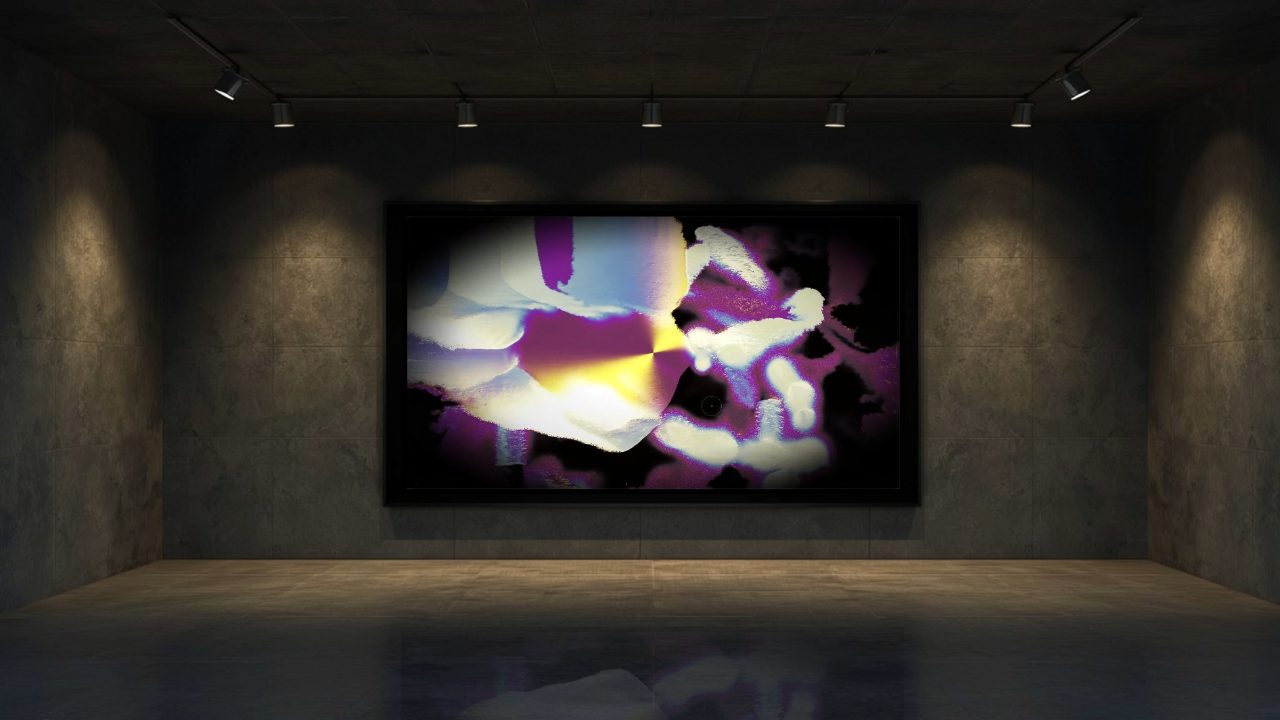
In the Kintsugi Digital trilogy, this idea takes centre stage. Each piece is conceived as a unique work, edition 1/1. Its singularity does not depend only on a different image, but on the specific condition that defines its existence.
This approach introduces a tension between the technical capacity to reproduce and the artistic decision not to. The digital medium makes it possible to preserve, duplicate and reconstruct; the work can, however, set its own limits against those possibilities.
Irreversibility thus transforms our relationship with time. A state can be documented, described or leave a trace, but that representation is not necessarily the same as recovering the original experience. The record lets us observe what happened; it does not automatically make the event repeatable.
I am interested in that distance between the process and its documentation. Between what remains visible and what belongs to a specific moment of the work.
I do not seek to turn irreversibility into a claim of superiority over other methods of generative creation. I am interested in it as a way of giving meaning to uniqueness, to the passing of time and to the impossibility of returning to exactly the same point.
In certain works, being unable to go back is part of what the work is.
From image to state
For a long time, the image has been the main way of presenting and understanding digital art. A screenshot, a composition or a sequence make it possible to show a result and preserve it. They are useful forms of representation, but they do not always explain how what we see was produced.
In generative art, the image may be only one of the manifestations of a wider structure.
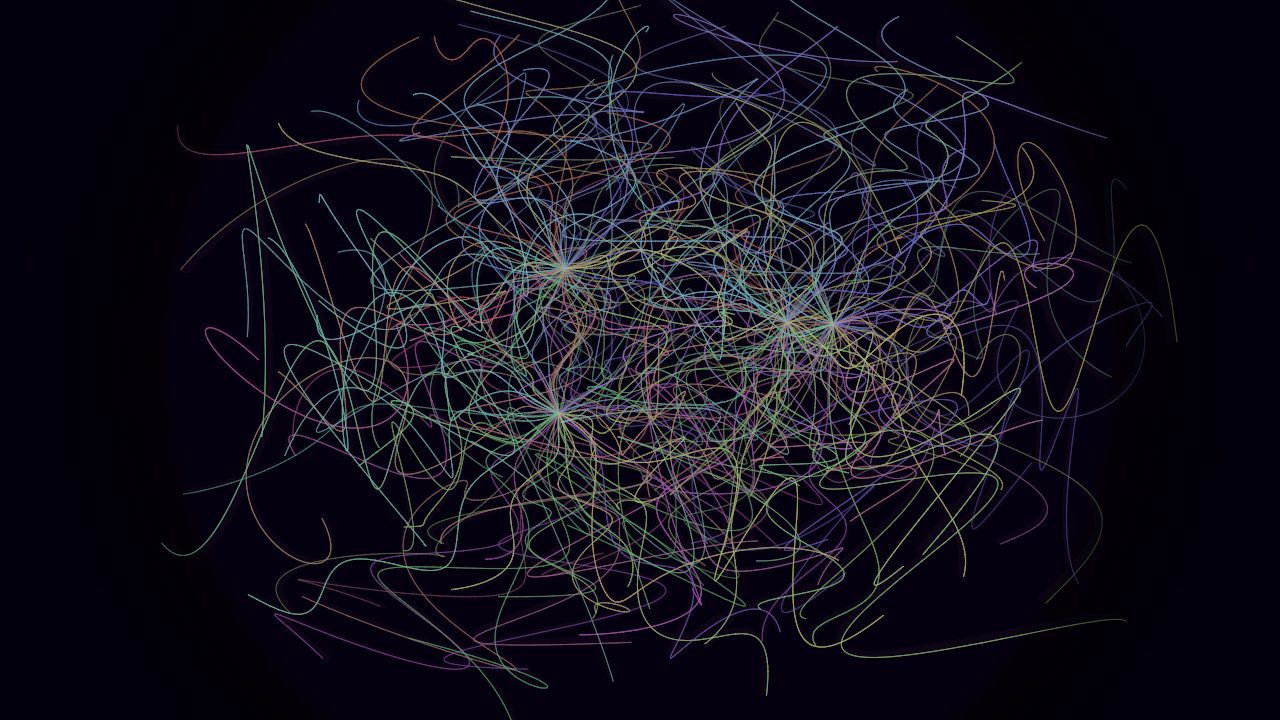
I am interested in working beyond the visual result: understanding the work as a system at work, made of rules, parameters, relationships and processes that determine its behaviour. The image shows an appearance; the state makes it possible to understand the conditions that produced it.
A state may include the configuration of the system at a given moment, its variables, the relationships between its elements and, when the architecture allows for it, the traces of earlier interactions. Not all of these components are present in every work. Each project defines which information takes part and what role it plays.
This perspective also changes the way a piece is experienced. An image documents an instant, but it can leave out the evolution, the responses and the relationships that are part of the process. In an interactive work, for example, observing its result is not the same as taking part in its behaviour. In others, time and transformation can be essential even without direct interaction.
That is why visual documentation matters, but it is not always enough. It can show what a work has produced; understanding its structure also requires attention to how it works.
In my work, the interest lies in that relationship between appearance and behaviour. In building systems where form is not an isolated element, but the visible expression of an internal logic.
Moving from image to state does not mean abandoning the image. It means widening the gaze: no longer considering only what appears, and starting to observe what generates it as well.
The work does not necessarily end in what we see. Sometimes, it begins there.
These texts gather some of the ideas that guide my practice: the construction of systems, emergent behaviour, singularity and the relationship between process and form.
They are not universal rules or closed definitions. They are positions that evolve together with the works.