Three Japanese words have turned into tattoos, shop names, self-help book titles and interior-design labels: kintsugi, wabi-sabi and yūgen. They almost always appear together and are almost always explained the same way: “the beauty of imperfection”. That phrase is not wrong, but it erases exactly what makes each of them interesting.
This guide explains what each concept means, where it comes from, how they differ and what is usually told wrong about them. At the end you will see why a digital art series, ours, carries these three names.
Kintsugi is a technique: repairing broken ceramics with lacquer and gold powder, leaving the repair visible. Wabi-sabi is a sensibility: appreciating what is simple, worn and changed by time. Yūgen is a quality: the beauty of what you sense but cannot fully see.
Quick comparison
| Kintsugi | Wabi-sabi | Yūgen | |
|---|---|---|---|
| Writing | 金継ぎ | 侘寂 | 幽玄 |
| What it is | A repair technique | An aesthetic sensibility | A quality of a work or a moment |
| Literal sense | “Golden joinery” | Wabi: sobriety, solitude · Sabi: what ages | “Dim and deep”, “mysterious” |
| Core idea | The break is part of the object’s history | What is humble and incomplete has value | What is suggested moves us more than what is shown |
| Historical context | Tea ceremony, from the late 15th century | Tea ceremony, 15th–16th centuries | Court poetry and nō theatre, 12th–15th centuries |
Kintsugi: what it is and what it means
Kintsugi (金継ぎ) translates as “golden joinery” or “golden splicing”. It is also called kintsukuroi (金繕い), “golden repair”. It is a lacquer craft: the broken pieces are joined with lacquer and the line of the repair is covered or mixed with gold powder, although silver or platinum are also used. The procedure is related to maki-e, the Japanese technique of decorating lacquerware by sprinkling metal powder.
Where it comes from
The most repeated explanation places its origin in the late 15th century. According to this account, the shōgun Ashikaga Yoshimasa sent a damaged tea bowl to China to be repaired and it came back held together with metal staples: an effective but crude repair. That would have encouraged Japanese craftsmen to look for a more beautiful solution. It is best read for what it is, a handed-down tradition rather than a precisely documented fact. There is even a famous Chinese bowl, nicknamed Bakōhan, whose large staples were compared to locusts.
What is clear is the link between kintsugi and chanoyu, the tea ceremony, where bowls were valuable objects with a history of their own. The taste for these repairs went so far that some collectors were accused of breaking pieces on purpose so they could have them repaired with gold.
How it is done
Sources usually distinguish three ways of working:
- Crack (hibi): fragments that fit together are joined and the seam is gilded.
- Piece: when a fragment is missing, the gap is fully rebuilt with lacquer and gold.
- Yobitsugi (呼び継ぎ): the gap is filled with a fragment from another piece of similar shape, like a mosaic of different origins.
Traditional kintsugi uses urushi, a natural lacquer that takes weeks to cure between coats and that, while fresh, can cause allergic skin reactions. Most of the “kintsugi kits” sold today use epoxy resin and metallic powder or mica. They are an accessible way to practise, but they are not the original technique.
What it means
The underlying idea is simple: breakage and repair are part of the object’s history, not the end of its useful life. Instead of disguising the damage, it is marked. That is why kintsugi is linked to wabi-sabi, to mushin (“mind without attachment”, the acceptance of change) and to mono no aware, the sensitivity to what passes.
Wabi-sabi: the beauty of the humble and the changing
Wabi-sabi (侘寂) joins two words that for centuries were independent:
- Wabi originally had a negative sense. In the poetry anthology Man'yōshū (8th century) it expressed the pain of unrequited love and, later, affliction or loneliness. Over time it came to name chosen sobriety: living with little, far from luxury, and finding serenity in it.
- Sabi was tied to desolation and to what ages: patina, moss, rusting metal, stillness. Its beauty is that of what time has gradually worked on.
The two ideas met in tea culture. Between the 15th and 16th centuries, masters such as Murata Jukō, Takeno Jōō and, above all, Sen no Rikyū (1522–1591) championed irregular bowls, small austere rooms and local objects over luxurious, flawless Chinese pieces. That way of serving tea was called wabi-cha. Behind it lies the influence of Zen Buddhism and its attention to impermanence.
In the West, the term became popular mainly from 1994 onwards, with the book Wabi-Sabi for Artists, Designers, Poets & Philosophers by the designer Leonard Koren. Koren describes it as the beauty of things imperfect, impermanent and incomplete, and of things modest and humble. For him, wabi-sabi is not a property of objects but a way of looking.
Yūgen: the beauty of what is not fully seen
Yūgen (幽玄) joins two characters that evoke the faint, the deep and the dark. It is pronounced roughly “yoo-gen”, with a long first vowel. The word comes from Chinese, and in its early Buddhist uses it named teachings so profound that they could not be fully grasped.
In Japan it entered the criticism of waka poetry. Around the 12th century, the poet Fujiwara no Shunzei (also read Toshinari) used it as praise when judging poetry contests: saying that a poem “reached yūgen” meant its emotion went beyond what its words named. Shortly after, Kamo no Chōmei, author of the celebrated Hōjōki, tried to explain it in his treatise Mumyōshō (written between 1211 and 1216) with an often-quoted image: an autumn evening when the sky has neither colour nor sound and, for no apparent reason, tears come to your eyes.
Its great theorist was Zeami (14th–15th centuries), who made yūgen the ideal of nō theatre, a refined, restrained and suggestive grace, and developed it in treatises such as Kakyō (“The Mirror of the Flower”). A century later, the poet and monk Shinkei summed it up this way: yūgen lies in the mind of whoever feels it and cannot be fully expressed in words.
How are they different?
They get mixed up so often that it helps to separate them with a simple rule:
- Kintsugi is done. It is a concrete practice, with materials and a procedure. It can express wabi-sabi, but it is not the same thing.
- Wabi-sabi is perceived in things. It is in the texture, the patina, the irregularity, in what time leaves visible.
- Yūgen is sensed. It is not on the surface but in what the surface lets you glimpse: the mist, the half-light, what is left unsaid.
Put another way: wabi-sabi looks at what is there, worn and humble; yūgen looks at what never quite appears; and kintsugi decides what to do with what has broken.
What is usually told wrong
“Kintsugi is an ancient self-help technique”
Kintsugi is about five centuries old and was born as a lacquer craft serving valuable objects. Its reading as a metaphor for emotional resilience, the “your wounds make you valuable” idea, is beautiful and legitimate, but it is largely modern and Western. Knowing the origin does not weaken the metaphor; it gives it context.
“Wabi-sabi is a decorating style”
Raw wood furniture, crumpled linen and rustic ceramics may have something of wabi-sabi, but the concept is not a colour palette. A piece “aged” in a factory and sold by the thousand is, in a way, the opposite: it imitates the mark of time without having lived it.
“All three are the eternal essence of Japan”
The scholar Suzuki Sadami argues, in an article published on nippon.com in 2024, that wabi, sabi and yūgen did not historically form a trinity. Each had its own era and field, and presenting them together as “the essence of Japanese aesthetics” took hold largely for foreign audiences, around the 1964 Tokyo Olympics and the 1970 Osaka World Expo. According to Suzuki, what they share is a common root in the Buddhist idea of mu, nothingness or emptiness.
“Yūgen simply means mystery”
“Mystery” is only part of it. Yūgen also implies elegance, depth and restraint: not everything enigmatic is yūgen. A horror film is mysterious; a mountain half-hidden by mist at dusk comes closer to yūgen.
Their echo in art today
These concepts have left ceramics and poetry behind. The designer and researcher Guy Keulemans, for example, analyses kintsugi in an academic study published in 2016 in The Journal of Modern Craft as part of what he calls transformative repair: fixing something in a way that changes its meaning instead of hiding the repair. In architecture, design and digital art the same question comes up: what happens if we stop erasing the traces?
Why a digital art series carries these names
At PROJEKTA2, the artist Alexandre Iglesias has created Kintsugi Digital, a series of three unique generative works, each an edition of 1/1. They do not aim to illustrate these concepts or reproduce the technique, but to carry their central question into something that did not exist when they were formulated: a work that changes because of what the visitor does and cannot go back.
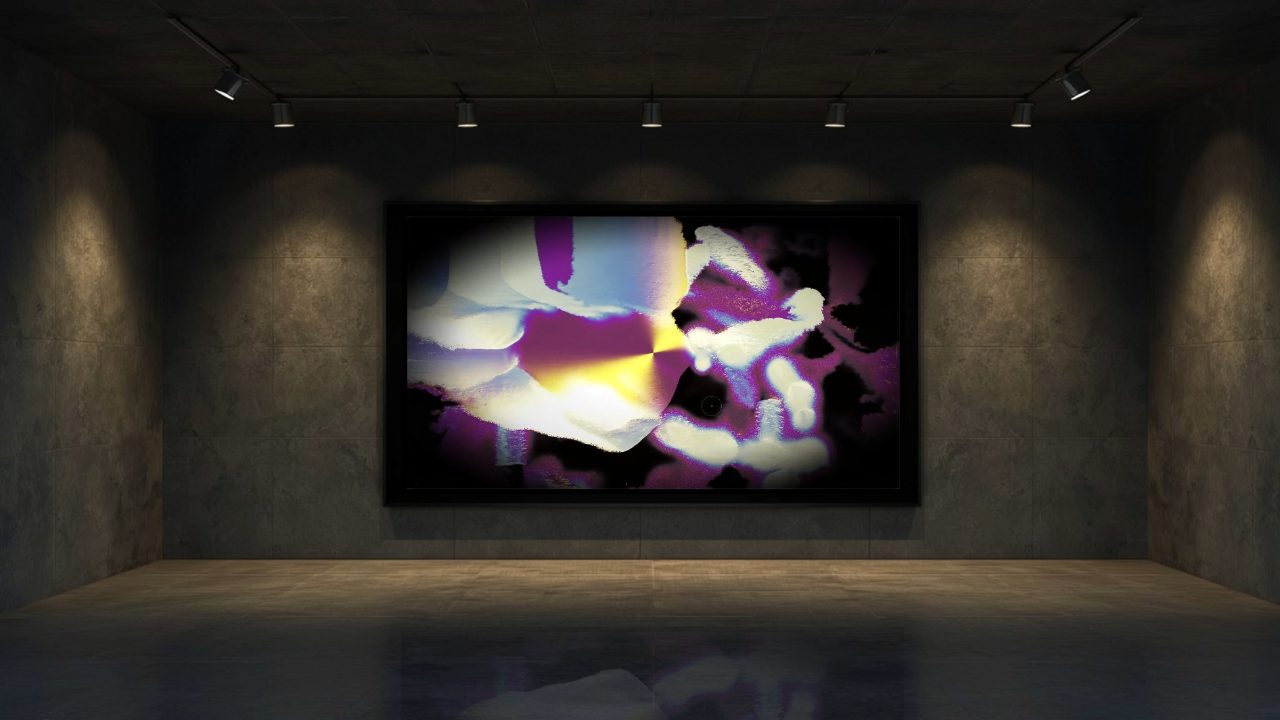
- Kintsugi I: every interaction fractures the surface and the cracks fill with light. What breaks is not erased; it becomes part of the work.
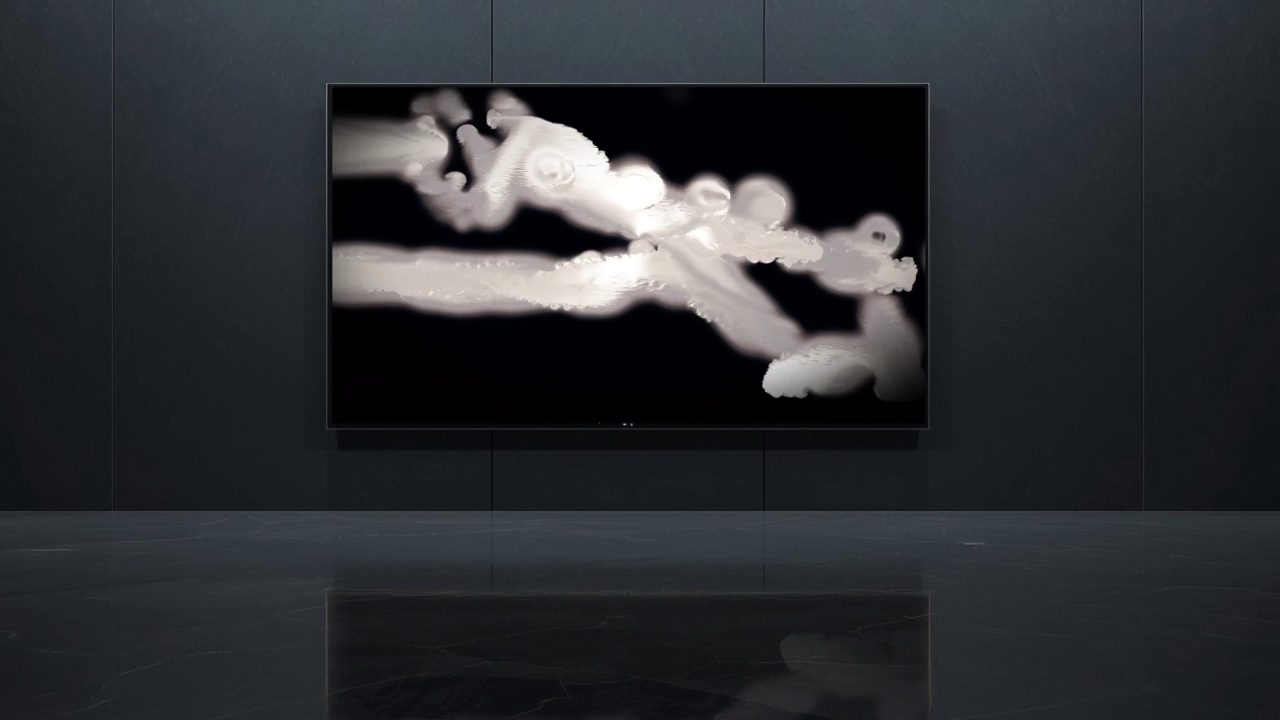
- Wabi: a fluid matter that responds to the gesture and slowly fades. What you do leaves not a fixed mark but a resonance that dissolves.
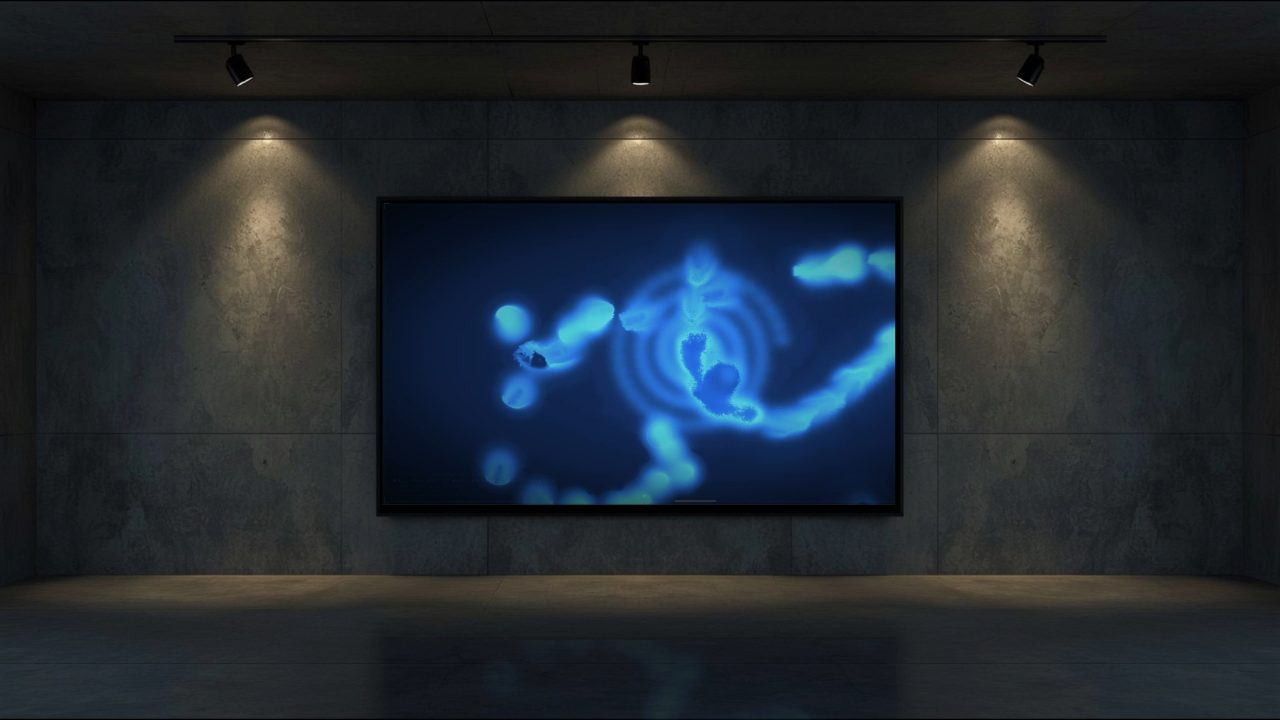
- Yūgen: two layers coexist in the same work and neither is shown whole. What matters is what you can guess.
If you want to go deeper into the idea of a work that remembers, the essay The Work That Remembers You Looked proposes four tests to tell whether a digital work is alive. And in the generative art glossary you will find the rest of the terms.
Frequently asked questions
What does kintsugi literally mean?
Kintsugi (金継ぎ) means “golden joinery”: kin is gold and tsugi means to join or splice. The term kintsukuroi (金繕い), “golden repair”, is also used.
Are kintsugi and wabi-sabi the same thing?
No. Kintsugi is a specific repair technique; wabi-sabi is a broader aesthetic sensibility. Kintsugi is often seen as an expression of wabi-sabi because it values the marks of use and time instead of hiding them.
What is the difference between wabi and sabi?
Wabi points to sobriety and the serenity of living with little; sabi, to the beauty of what ages and to stillness. For centuries they were separate words, and they came together mainly in the culture of the tea ceremony.
What does yūgen mean and how is it pronounced?
Yūgen (幽玄) names a deep, suggested beauty: that of what you sense but cannot fully see. It is pronounced roughly “yoo-gen”, with a long first vowel.
Can you do kintsugi at home?
Yes, with modern kits that use epoxy resin and metallic powder, although this is not the traditional technique. Kintsugi with urushi lacquer requires training, weeks of work and precautions, because fresh lacquer can cause allergic skin reactions.
What is digital kintsugi?
At PROJEKTA2 it is the name of a series of three unique generative works by Alexandre Iglesias (Kintsugi I, Wabi and Yūgen) that carry these ideas into interactive works: what the visitor does transforms the work and cannot be undone.
- Leonard Koren, Wabi-Sabi for Artists, Designers, Poets & Philosophers, Stone Bridge Press, 1994.
- Suzuki Sadami, «“Wabi”, “sabi” et “yûgen” : comment définir l'esthétique japonaise traditionnelle ?», nippon.com, 5 January 2024.
- Guy Keulemans, “The Geo-cultural Conditions of Kintsugi”, The Journal of Modern Craft, 9(1), 2016, pp. 15–34.
- Kamo no Chōmei, Mumyōshō (c. 1211–1216) and Hōjōki (1212).
- Zeami, Kakyō (“The Mirror of the Flower”), a treatise on nō theatre.
- Christy Bartlett et al., Flickwerk: The Aesthetics of Mended Japanese Ceramics, exhibition catalogue, 2008.